EMF Shielding Paint: Does It Work, and How to Choose the Right One
EMF shielding paint is a specially formulated coating that turns an ordinary wall into a barrier against electromagnetic fields and radio-frequency radiation. Rolled on like normal paint but loaded with conductive particles, it can cut the wireless signals passing through a wall by 99% or more when installed correctly. For people trying to lower their exposure to Wi-Fi, cell towers, and neighboring routers, it is one of the few whole-room solutions that does not require tearing open the walls.
This guide explains what EMF shielding paint actually does, how well it works, the different types available, and how to choose and apply the right one. For the deeper technical breakdown of the conductive chemistry, see our companion guide on conductive paint.
Introduction
Most EMF-reduction products protect a single device or a small area: a phone pouch, a bed canopy, a window film. EMF shielding paint is different because it treats the room itself. Once a wall, ceiling, or floor is coated and properly grounded, everything inside that boundary sits behind a continuous conductive shield. That makes it the go-to option for bedrooms, home offices, and nurseries where people want sustained, low-exposure environments rather than spot protection.
What Is EMF Shielding Paint?
EMF shielding paint is a water-based primer or paint that contains conductive materials, most commonly carbon, graphite, nickel, or silver. These particles link together as the paint dries to form a conductive film across the surface. When radio-frequency radiation or a low-frequency electric field hits that film, the energy is reflected and absorbed rather than allowed to pass through. The paint does not “cancel” EMF in the air; it creates a shielded surface that signals cannot easily cross.
It is worth being precise about terminology. “EMF paint,” “EMF blocking paint,” “RF shielding paint,” and “conductive paint” all refer to the same category of product. The differences that matter are the conductive ingredient, the amount of shielding (measured in decibels), and whether grounding is required.
How EMF Shielding Paint Works
The Shielding Mechanism
The dried conductive layer behaves like a thin version of a Faraday cage. Incoming radio waves induce currents in the conductive film, and that energy is dissipated across the surface and, in the case of low-frequency electric fields, drained to ground. The result is a large reduction in the signal strength on the other side of the wall. Quality EMF paints achieve 30 to 60+ dB of attenuation, benchmarked against testing methodologies used in accredited electromagnetic compatibility labs,[2] where every 10 dB represents a tenfold reduction in signal power.

Why Grounding Matters
Carbon and graphite EMF paints must be grounded to work against low-frequency electric fields and to perform safely. Grounding is done with a special conductive grounding strap or plate connected to the painted surface and tied to the building’s electrical ground. Without grounding, a carbon-based paint still reflects high-frequency RF to a degree, but it will not properly handle electric fields and can even hold a charge. Getting the grounding right is the single most important installation step.
Types of EMF Shielding Paint
| Type | Conductive Material | Best For | Grounding |
|---|---|---|---|
| Carbon / graphite paint | Carbon particles | Whole-room RF + electric field shielding; the most common choice | Required |
| Nickel paint | Nickel | High-frequency RF (5G, Wi-Fi); strong attenuation | Recommended |
| Silver / silver-coated paint | Silver | Premium high-performance shielding | Recommended |
| Copper-based paint | Copper | Good conductivity at moderate cost | Recommended |
For a closer look at each option, see our guides to copper paint, nickel-coated paint, silver-coated paint, and carbon-based paint.
Does EMF Shielding Paint Actually Work?
Yes, when it is installed correctly. Independent shielding measurements consistently show that a properly applied, grounded coat of quality EMF paint reduces RF signal strength dramatically, often by 99% or more. The caveats are important:
- Coverage must be complete. Signals leak through gaps, so the paint has to cover the entire surface, and untreated windows and doors remain weak points unless shielded separately.
- Grounding is not optional for carbon-based products.
- Coat thickness matters. Most products require two coats to hit their rated attenuation.
- It shields, it does not eliminate sources inside the room. A router or phone inside the shielded space still emits; the paint blocks external signals and contains internal ones.
Popular Brands and Product Examples
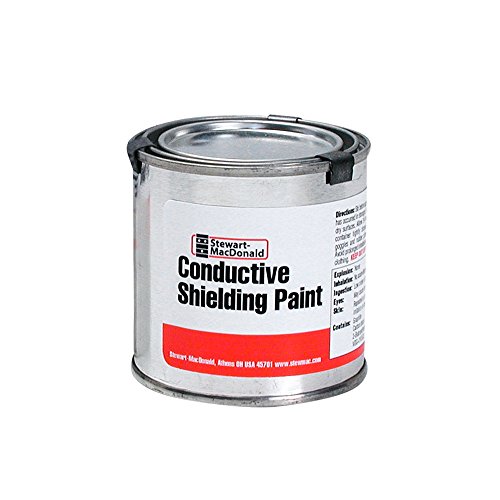
Established EMF shielding paints include YShield HSF54 and HSF64 (carbon-based, widely regarded as industry standards), Woremor EMR and shielding paints, Giron, and CuPro-Cote (a copper-based conductive coating). These are sold through specialty EMF retailers rather than general hardware stores, and most are paired with a matching grounding kit from the same manufacturer. Always match the paint to a compatible grounding strap and follow the manufacturer’s coverage rate.
How to Apply EMF Shielding Paint
- Prep the surface as you would for any primer: clean, dry, and smooth.
- Apply the first coat with a roller at the manufacturer’s stated coverage rate. Do not over-thin it, which reduces conductivity.
- Apply a second coat once the first is dry to reach the rated shielding level.
- Install the grounding kit before covering with topcoat, connecting the conductive layer to electrical ground.
- Topcoat with normal latex paint in any color once grounding is verified.
Common Installation Mistakes to Avoid
- Skipping or improperly connecting the ground.
- Applying a single thin coat and expecting full attenuation.
- Leaving windows, doors, and outlets untreated, which become signal leak points.
- Thinning the paint to stretch coverage, which breaks the conductive film.
Can You Make Your Own EMF Shielding Paint?
This is a common search, and the honest answer is that DIY mixtures rarely work. Homemade blends of graphite powder or nickel additives into regular paint produce inconsistent, poorly bonded films with unpredictable and usually poor shielding. Commercial EMF paints are engineered so the conductive particles form a continuous, measurable, groundable layer. For anything you expect to actually reduce exposure, a tested commercial product is the reliable route.
How Much Does EMF Shielding Paint Cost?
EMF shielding paint costs significantly more than ordinary paint because of the conductive materials. Pricing is typically quoted per liter or per square meter of coverage, and total cost depends on room size, the number of coats, and the grounding kit. A single bedroom is a realistic weekend project; a whole-home shield is a larger investment best planned room by room, prioritizing sleeping areas first.
Health and Safety Considerations
EMF shielding paints are water-based and, once cured and topcoated, are safe for interior living spaces. The main safety point is electrical: a conductive surface tied to your building’s ground must be installed correctly, ideally verified by someone comfortable with electrical grounding. Never connect a shielding layer to ground improperly, and follow the manufacturer’s grounding instructions exactly.

Frequently Asked Questions
Does EMF shielding paint really block EMF?
Yes. A properly applied, grounded coat of quality EMF paint reflects and absorbs radio-frequency radiation and, when grounded, low-frequency electric fields, commonly reducing signal strength by 99% or more across the treated surface.
Does EMF paint need to be grounded?
Carbon and graphite-based EMF paints must be grounded to work against electric fields and to be safe. Grounding is done with a manufacturer-supplied conductive strap connected to your electrical ground.
What is the best type of EMF shielding paint?
Carbon-based paints like YShield HSF54 are the most widely used all-around choice. Nickel and silver paints offer very high attenuation for high-frequency RF such as 5G and Wi-Fi. The best choice depends on the frequencies you want to block and your budget.
How many coats of EMF paint do I need?
Most products require two coats to reach their rated shielding level. A single coat provides partial attenuation only.
Can I paint over EMF shielding paint?
Yes. After the conductive layer is applied and grounded, you topcoat it with normal latex paint in any color. The shielding lives in the base coats.
Does EMF paint block 5G and Wi-Fi?
Quality EMF paints attenuate the high-frequency bands used by Wi-Fi and 5G sub-6 GHz. Nickel and silver formulations are especially effective at these higher frequencies.
Can you make EMF shielding paint at home?
Homemade mixes almost never produce reliable shielding because the conductive particles do not form a continuous, groundable film. A tested commercial product is the dependable option.
Key Takeaways
- EMF shielding paint is a conductive coating that turns walls into a room-wide barrier against RF radiation and electric fields.
- It works, delivering 30-60+ dB of attenuation, but only with full coverage, two coats, and correct grounding.
- Carbon-based paints are the standard all-rounder; nickel and silver excel at high-frequency RF like 5G and Wi-Fi.
- Windows, doors, and outlets remain leak points and need separate shielding.
- DIY paint mixes are unreliable; use a tested commercial product with a matching grounding kit.
References
- Building Biology Institute – EMF Measurement Guidelines
- NIST – Electromagnetic Compatibility and Telecommunications LAP
Related reading: Conductive Paint (technical guide) · Copper Paint · Top 10 Frequency-Blocking Materials
{“@context”: “https://schema.org”, “@type”: “FAQPage”, “mainEntity”: [{“@type”: “Question”, “name”: “Does EMF shielding paint really block EMF?”, “acceptedAnswer”: {“@type”: “Answer”, “text”: “Yes. A properly applied, grounded coat of quality EMF paint reflects and absorbs radio-frequency radiation and, when grounded, low-frequency electric fields, commonly reducing signal strength by 99% or more across the treated surface.”}}, {“@type”: “Question”, “name”: “Does EMF paint need to be grounded?”, “acceptedAnswer”: {“@type”: “Answer”, “text”: “Carbon and graphite-based EMF paints must be grounded to work against electric fields and to be safe. Grounding is done with a manufacturer-supplied conductive strap connected to your electrical ground.”}}, {“@type”: “Question”, “name”: “What is the best type of EMF shielding paint?”, “acceptedAnswer”: {“@type”: “Answer”, “text”: “Carbon-based paints like YShield HSF54 are the most widely used all-around choice. Nickel and silver paints offer very high attenuation for high-frequency RF such as 5G and Wi-Fi. The best choice depends on the frequencies you want to block and your budget.”}}, {“@type”: “Question”, “name”: “How many coats of EMF paint do I need?”, “acceptedAnswer”: {“@type”: “Answer”, “text”: “Most products require two coats to reach their rated shielding level. A single coat provides partial attenuation only.”}}, {“@type”: “Question”, “name”: “Can I paint over EMF shielding paint?”, “acceptedAnswer”: {“@type”: “Answer”, “text”: “Yes. After the conductive layer is applied and grounded, you topcoat it with normal latex paint in any color. The shielding lives in the base coats.”}}, {“@type”: “Question”, “name”: “Does EMF paint block 5G and Wi-Fi?”, “acceptedAnswer”: {“@type”: “Answer”, “text”: “Quality EMF paints attenuate the high-frequency bands used by Wi-Fi and 5G sub-6 GHz. Nickel and silver formulations are especially effective at these higher frequencies.”}}, {“@type”: “Question”, “name”: “Can you make EMF shielding paint at home?”, “acceptedAnswer”: {“@type”: “Answer”, “text”: “Homemade mixes almost never produce reliable shielding because the conductive particles do not form a continuous, groundable film. A tested commercial product is the dependable option.”}}]}These statements have not been evaluated by the Food and Drug Administration. This information is not intended to diagnose, treat, cure, or prevent any disease. Content is for informational purposes only and is not medical advice; consult a qualified healthcare provider before starting any supplement. As an Amazon Associate we earn from qualifying purchases.